Go Home

Next Project
5GenCare – 2025
Building a Community Beyond the Baby Monitor

My Role
Lead Designer and
Researcher
Timeline
3 months
Team
Designer
Responsibilities
User Research
Ideation
Product Direction
Responsibilities
User Research
Ideation
Product Direction
Introduction
As a lead designer, my role in the 5GenCare project was to conduct user research and facilitate discussions within the client team to align strategy for the next phase of monetization efforts. The company aimed to move beyond their core baby monitor product and explore how they could cultivate a community that would provide long-term value to users while expanding their audience.
Understanding the Project
To begin with, we sought to understand the key elements of the project:
-
Who: 5GenCare has a steady user base of parents who use their baby monitors.
-
What: The company wanted to explore ways to build a community that provides value beyond the product itself.
-
Why: The lifecycle of a baby monitor is short, meaning users often leave once their children outgrow the product. The company needed a strategy to retain users and expand its reach by offering value beyond hardware.
01
Research
Our Research Direction
We focused on understanding both the current user base and potential avenues for extending engagement beyond the product’s lifecycle, in the following key areas:
User Needs & Behavior
-
Current Usage Patterns: Understand how parents are currently using the baby monitors and what their ongoing needs are once the product’s primary function (monitoring) becomes less relevant.
-
Pain Points: Identify challenges parents face that could be solved by a community or additional services beyond just the hardware.
-
Post-Product Transition: Explore what happens when parents stop using the baby monitors.
Community Engagement
-
Interest in a Community: Investigate if parents would be interested in joining a community for support, advice, or sharing experiences, especially as their children grow.
-
Value Proposition: Define what would make a community valuable (e.g., educational content, peer support, child development resources, exclusive offers, etc.).
-
Competitor/Market Analysis: Research other brands that have successfully built post-product communities, or explore industries with similar products to understand what has worked elsewhere.
Brand Perception & Loyalty:
-
Brand Affinity: Gauge the level of emotional connection parents have with 5GenCare and whether there is potential to build brand loyalty beyond the product.
-
Retention Strategies: Identify successful strategies for retaining users in similar categories and how those could apply to 5GenCare’s context.
Future Product and Service Extensions:
-
Potential New Offerings: Explore what services, tools, or products 5GenCare could develop that would appeal to parents as their children age.
-
Cross-Selling Opportunities: Assess the potential for offering related products or services to parents after they outgrow the baby monitor, such as child development tools or family-oriented technology.
Research Methods
A mix of qualitative and quantitative research methods were employed to understand user behavior, needs, and attitudes while identifying potential opportunities for extending engagement.
User Interviews
-
Purpose: Deep dive into parents’ experiences with the baby monitor and their broader parenting journey.
-
Approach: Conduct one-on-one interviews with a diverse sample of parents who are current or former users of 5GenCare’s products. Focus on understanding their pain points, what they value in their parenting journey, and their openness to joining a community.
-
Questions: Explore topics like post-product usage, needs they have beyond monitoring, community engagement interests, and what would motivate them to remain engaged with the brand after the monitor’s lifecycle ends.
Surveys
-
Purpose: Gather broad insights from a larger group of parents to identify trends and validate hypotheses from the interviews.
-
Approach: Distribute online surveys to current or previous customers. Include both closed-ended (multiple choice, Likert scale) and open-ended questions.
-
Questions: Focus on usage patterns, interest in potential community features, willingness to participate in ongoing brand activities, and retention-driving factors.
Competitor Analysis
-
Purpose: Understand how other companies in the baby tech space or related industries (e.g., parenting, health) engage users beyond the product.
-
Approach: Analyze competitors or similar brands to see if they’ve successfully built communities or extended engagement post-product lifecycle. Identify any features, content, or services that have worked well for them.
-
Examples: Review customer reviews, social media communities, loyalty programs, and any additional services offered by competitors.
Customer Journey Mapping (Hypothesis)
-
Purpose: Visualize and understand the entire lifecycle of the user experience with the product, from purchase to post-use.
-
Approach: Map out the journey to identify key touchpoints where users may drop off or where engagement could continue beyond the baby monitor’s usage.
-
Outcomes: Highlight areas of opportunity to keep parents engaged after the product lifecycle ends, such as transitioning from a product-focused relationship to an ongoing community connection.
Competitors Observed
Peanut
A social networking app for mothers offering peer-to-peer support, local meetups, and expert sessions. While it has strong community engagement, it primarily caters to mothers and lacks expert-driven content.
What to Expect
A pregnancy and parenting app providing expert advice, milestone tracking, and community features. While it offers reliable, expert-backed content, its community interactions are less robust, and it’s heavily focused on pregnancy and early childhood.
BabyCenter
Provides expert advice, milestone tracking, and community forums. However, it suffers from overwhelming content and low community engagement, particularly as the child grows beyond infancy.
The Bump
Focuses on pregnancy tracking and community forums. Its narrow focus on early parenting stages makes it less relevant as children grow older.
02
User Interviews

06
Proposed Solution
03
Survey
04
Competitive Analysis
Current Usage
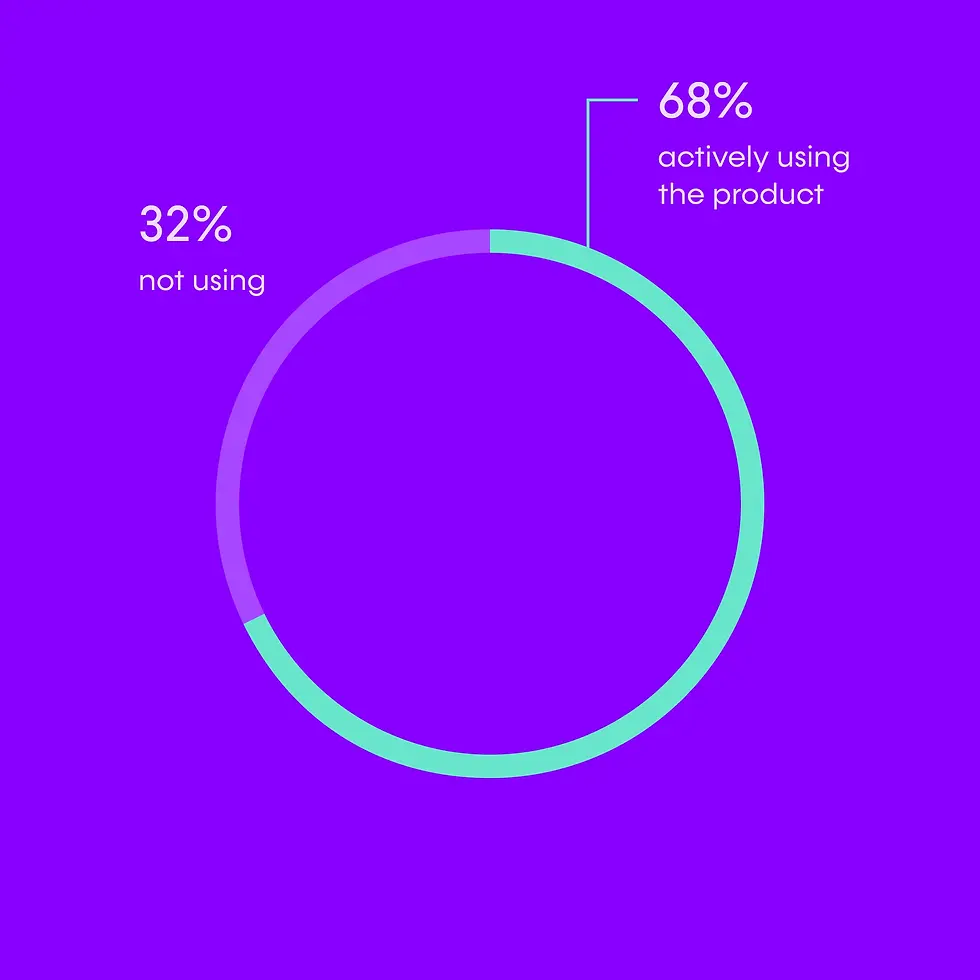
A significant portion (68%) of parents is still actively using the product, but 32% no longer uses it due to their children outgrowing the product.

Content Preferences
Parents are mostly interested in expert parenting advice (55%) and peer-to-peer support (38%), while discounts and product recommendations were less popular.
Customer Stages
Onboarding: Parents first engage with 5GenCare’s baby monitor product. They may need help with setup, product features, and initial use.
-
Touchpoints: Product purchase, onboarding guide, setup support, app installation.
-
Emotions: Curiosity, excitement, minor frustration with setup.
-
Opportunities: Create a seamless, easy-to-understand onboarding experience with video tutorials and in-app support.
Usage: Parents begin using the baby monitor, monitoring their baby’s sleep, feeding schedules, and health.
-
Touchpoints: Regular use of the baby monitor, checking live feed, sleep tracking data, usage notifications.
-
Emotions: Assurance, satisfaction, occasional stress (e.g., during baby’s sleep issues).
-
Opportunities: Provide additional insights based on monitor data (e.g., sleep tips, personalized advice, emotional support).
Transition: As the child grows, parents may stop using the baby monitor and look for continued value.
-
Touchpoints: Less frequent use of the product, app notifications, potential disengagement.
-
Emotions: Loss, frustration, nostalgia for the product’s initial value.
-
Opportunities: Retain engagement by offering parenting tips, milestone tracking, expert resources, and transitioning content.
Post-Product Engagement: Parents are looking for ongoing community support and parenting resources.
-
Touchpoints: Parenting forums, expert sessions, milestone tracking, wellness content.
-
Emotions: Seeking reassurance, community, curiosity about next parenting stages.
-
Opportunities: Develop a community space with expert-led content, ongoing discussions, and tools to track the child’s development.
Based on our research and competitive analysis, we fine-tuned with the client the direction and key considerations for the next phase of development.
08
Project Outcomes & Challenges
Key Insights
Back to Other Projects
Mission
To empower and support parents through every stage of their child's growth, offering expert-led resources, peer-to-peer connections, and personalized guidance, creating a nurturing community that extends beyond the baby monitor product lifecycle.

Tone & Manner
Empathetic & Supportive: The tone should be warm, friendly, and reassuring, showing empathy for the challenges parents face.
-
Example: "We know parenting isn't always easy. We’re here to support you every step of the way."
Trustworthy & Expert-Backed: Content should feel credible and reliable, with a strong focus on expert advice.
-
Example: "Hear from our trusted experts, who share insights on everything from sleep routines to toddler nutrition."
Inclusive & Non-Judgmental: Ensure the language fosters a sense of belonging and openness, encouraging diverse voices and perspectives.
-
Example: "Every family’s journey is unique. We’re here to support you."
Engaging & Community-Oriented: A conversational and engaging tone that invites users to participate and contribute to the community.
-
Example: "What’s your favorite parenting tip? Share it with our community and get advice from fellow parents!"
Key Features
Expert-Driven Content
-
Access to articles, videos, and webinars led by pediatricians, sleep consultants, nutritionists, and other parenting experts.
-
Personalized advice based on a child’s age, milestones, and specific needs.
Parenting Milestone Tracking
-
An interactive tool to track developmental milestones and provide personalized suggestions for activities, health checks, and parenting tips.
Parenting Forums & Support Groups
-
A space for parents to connect, share experiences, ask questions, and offer advice in different stages (e.g., newborn, toddler, pre-school).
-
Localized groups to connect parents based on region or specific needs (e.g., first-time parents, parents of multiples).
Community Events & Meetups
-
Regular online and offline events such as expert Q&A sessions, live webinars, and parenting meetups.
-
Local events and community-building activities to promote peer-to-peer support.
Resource Hub
-
A centralized collection of resources such as printable schedules, checklists, product recommendations, and parenting guides.
-
Resources categorized by age, parenting style, or challenges.
Parenting Toolbox
-
A set of tools (e.g., baby sleep calculator, growth tracker, feeding scheduler) that help parents stay organized and informed.
Push Notifications & Alerts
-
Notifications tailored to milestones, new content, events, and important updates based on the user’s child’s age and stage.
07
Implementation Strategy
Outcomes
Initial Look & Feel Delivered
Successfully delivered the initial look and feel of the app, establishing the design direction, visual style, and overall tone. The designs reflect the brand’s values of empathy, trustworthiness, and support, laying a solid foundation for the app’s future development.
Visual Identity and Branding Established
Defined the app’s visual identity, including key elements like color palette, typography, iconography, and layout. This visual direction is consistent with 5GenCare’s brand and ensures the app will feel cohesive and familiar to the target audience.
Key Features Conceptualized
Presented the core features of the app, including milestone tracking, expert-led content, peer support forums, and personalized parenting resources. These features were conceptualized and visually represented to demonstrate the potential of the app in supporting parents beyond the product lifecycle.
Stakeholder Alignment
Presented the initial designs to stakeholders and gathered valuable feedback. This feedback helped ensure alignment on the product’s vision and confirmed the app’s strategic direction, enabling the team to move forward with greater clarity.
User-Centered Design Approach
The initial design phase centered around understanding the user’s needs, offering a clear design foundation that could evolve into a comprehensive, user-friendly community platform. The focus was on creating an intuitive, accessible experience for parents, regardless of tech-savviness.


Project Phases
Phase 1: Product & Market Research
-
Conduct in-depth user research to understand the needs, challenges, and pain points of parents across different stages.
-
Identify key competitors and gaps in existing parenting apps, especially in long-term community engagement and expert support.
-
Survey parents to understand their expectations for a community app and what features are most valuable.
Phase 2: App Design & Development
-
Design a user-friendly, intuitive interface that emphasizes ease of use for parents with varying levels of tech-savviness.
-
Integrate the product’s existing data (e.g., sleep patterns, monitoring data) to provide personalized and relevant content to users.
-
Develop key features such as milestone tracking, parenting forums, expert content, and event integration.
-
Prioritize mobile-first design and accessibility features to ensure all parents can easily access the app.
Phase 3: Beta Testing & Feedback Collection
-
Launch a beta version to a select group of parents (ideally loyal 5GenCare product users) to gather feedback on app usability, features, and content.
-
Analyze data from beta users, identify pain points, and refine the app for broader release.
-
Encourage feedback on user experience and feature requests to ensure the app truly meets parents’ needs.
Phase 4: Launch & Marketing
-
Develop a go-to-market strategy that emphasizes the app’s unique position as a long-term support system, going beyond the product lifecycle.
-
Promote the app via digital channels (social media, content marketing, partnerships with parenting bloggers, etc.).
-
Offer early adoption perks (e.g., access to exclusive expert sessions or events) to encourage app downloads and engagement.
Phase 5: Post-Launch Engagement & Growth
-
Continuously gather user feedback through in-app surveys, reviews, and social media to further improve the app.
-
Introduce new features, content, and events based on user demand (e.g., more personalized expert advice, expanded parenting groups).
-
Foster community engagement through gamification (e.g., badges for community participation, milestone achievements).
-
Focus on user retention by offering content that evolves with the user’s parenting journey (e.g., transitioning from baby-related content to preschool topics).
Phase 6: Expansion & Long-Term Development
-
Expand the community by incorporating diverse groups (e.g., parents with special needs children, single parents) to foster inclusivity.
-
Partner with trusted brands and experts for sponsored content or events to sustain app growth and monetization.
-
Continuously innovate with new technologies (e.g., AI-driven content recommendations, virtual expert consultations) to stay ahead of competitors and increase app value.
Key Insights from User Interviews
Personal experiences are sought after because they are real and relatable and give different perspectives.
The US healthcare system is systematic and efficient but perhaps too rigid and uncaring when it comes to supporting specific needs and values.
Tracking apps are useful at certain stages until they are irrelevant and abandoned. Photo-taking and sharing is important to document experiences, and the current experience is good enough.
Online shopping is preferred over offline because it is easier to compare reviews and discover products online.
The quality of groups depends on number, locations, and whether the members share similar values with the respondents.
Relationships are good with forum members online but won't extend beyond the web.
No particular content format is preferred over another, with the stage of pregnancy affecting which content format is preferred.
Physical help for housework and more time to sleep are needed.
Key Insights from the Survey
-
Current Usage: A significant portion (68%) of parents is still actively using the product, but 32% no longer uses it due to their children outgrowing the product.
-
Content Preferences: Parents are mostly interested in expert parenting advice (55%) and peer-to-peer support (38%), while discounts and product recommendations were less popular.
-
Monetization Potential: There’s a smaller but notable opportunity (10%) for parents willing to pay for premium content, with 25% open to the idea but requiring more consideration.
-
Referrals: A good portion (85%) would recommend 5GenCare to other parents, showing high satisfaction with the product.
Key Insights & Differentiation Opportunities
-
``Community Engagement: Competitors tend to focus on early stages of parenting, with limited long-term support. 5GenCare has an opportunity to build a holistic, lifecycle-based community that supports parents beyond the baby monitor phase, creating value well after the product lifecycle.
-
Expert-Driven Content: While competitors like Peanut rely heavily on peer-to-peer support, 5GenCare can differentiate by integrating expert consultations, offering reliable advice from pediatricians, sleep specialists, and child psychologists to enhance its value.
-
Product Integration: Leveraging its existing baby monitor product, 5GenCare can offer personalized, data-driven content (e.g., sleep patterns, growth milestones) to provide tailored resources and foster ongoing engagement as children grow.
Competing directly with larger platforms may be challenging. 5GenCare can carve out a niche by targeting parents whose children are transitioning out of the baby monitor phase, focusing on ongoing developmental support and parenting tools. By focusing on expert advice, ongoing engagement, and product integration, 5GenCare has the opportunity to strategically position itself in a less crowded space, offering continued value to parents as their children grow.
The contract for this phase of the 5GenCare Community App project concludes with the delivery of the initial look and feel. Our work during this phase focused on setting the visual foundation and defining the strategic direction for the app. We aimed to create a strong initial design concept that aligns with 5GenCare’s mission of supporting parents beyond the product lifecycle. While the contract does not extend beyond this point, the outcomes of this phase lay the groundwork for further design and development, which will be built upon in subsequent stages of the project.
05
Journey Mapping
(Hypothesis)
Pain Points
-
Early on-boarding confusion: Some users may experience difficulty setting up or using the baby monitor initially.
-
Opportunity: Improve onboarding materials and create in-app help features or live chat support.
-
Lack of post-product value: Once the baby outgrows the monitor, parents may feel the product no longer serves them, leading to disengagement.
-
Opportunity: Transition users to a community space and provide resources that remain relevant as their child grows.
-
Disconnection after product use: After the product lifecycle, parents may not feel connected to the brand anymore.
-
Opportunity: Position the brand as a long-term parenting partner with ongoing advice, emotional support, and expert resources.
While the delivery of the initial look and feel represents a solid step forward, it’s important to acknowledge that significant work remains to fully realize the potential of the 5GenCare community app. The visual foundation and core features are well-defined, and the design direction aligns with 5GenCare’s vision of providing ongoing value to parents. However, for the app to evolve into a truly engaging and effective platform, there will be critical next steps, including refining user flows, prioritizing features, and integrating detailed interaction design.
The success of the project moving forward will largely depend on the client’s commitment to these next phases and the strategic decisions made about long-term user engagement and feature development. It’s essential that the app remains aligned with user needs, and that resources are allocated appropriately to ensure the continued refinement of the product. As we move forward, close collaboration and a clear focus on strategic priorities will be key to transforming the current concept into a fully realized, valuable community platform for parents.
Key Opportunities for 5GenCare
-
Ongoing Engagement: Use the baby monitor data to offer personalized content (e.g., developmental milestones, sleep tips) and introduce parents to expert-led communities.
-
Expert Integration: Bring in professionals (pediatricians, sleep specialists, child psychologists) to provide value-added content that parents trust and turn to.
-
Holistic Parenting Platform: Evolve from a product-based offering to a full parenting platform that supports parents in every stage, from infancy to early childhood and beyond.
-
Community Building: Cultivate a supportive community where parents can ask questions, share experiences, and find emotional support throughout the parenting journey.
Vision
To become the go-to platform for holistic parenting support, connecting parents globally with valuable resources, trusted experts, and a community of like-minded individuals. We aim to redefine the parenthood journey by offering long-term support, building lasting relationships, and enriching the parenting experience.
Challenges
No Finalized User Flow or Wireframes
While the look and feel have been delivered, there is no finalized user flow or wireframes yet. The next steps would involve further refining the user experience and defining how the app’s features will be logically organized for smooth navigation.
Feature Prioritization
With many potential features being discussed, prioritizing which features to include in the MVP (Minimum Viable Product) was a challenge. Deciding what should be developed next and what can be delayed for future releases will require further input from stakeholders and user feedback.
Lack of Full User Testing
Since the prototype is still in its conceptual phase, user testing was limited to the visual and functional demonstration of the design. A more in-depth round of testing will be necessary in future stages to ensure the app truly meets user needs and expectations.
Ensuring Cross-Platform Consistency
The app’s visual designs were created with responsiveness in mind, but testing on multiple platforms (e.g., mobile, tablet, desktop) remains incomplete. Ensuring a consistent experience across all devices will be a critical next step.
Community Integration Design
Designing a seamless, engaging community experience (forums, support groups, events) that feels natural within the app was not fully addressed in this phase. Developing these features further while maintaining ease of use and user engagement will be a challenge in future phases.
Establishing Long-Term Engagement Strategies
With the contract ending at the initial look & feel, the challenge of defining long-term user engagement strategies is still open. The app’s success will depend on the ability to keep users engaged, and that will require continued focus on user behavior and content that resonates over time.
Lack of Detailed Interaction Design
While the initial designs provided a solid aesthetic direction, the finer details of interaction design—like button states, transitions, and microinteractions—are not yet finalized. These elements will need to be addressed in subsequent phases.

Monetization Potential
There’s a smaller but notable opportunity (10%) for parents willing to pay for premium content, with 25% open to the idea but requiring more consideration.

Referrals
A good portion (85%) would recommend 5GenCare to other parents, showing high satisfaction with the product.
Product Integration
Expert-Driven Content
Community Engagement